
Good Human Resources: The Backbone of an Organization’s Future, Growth, and Turnover
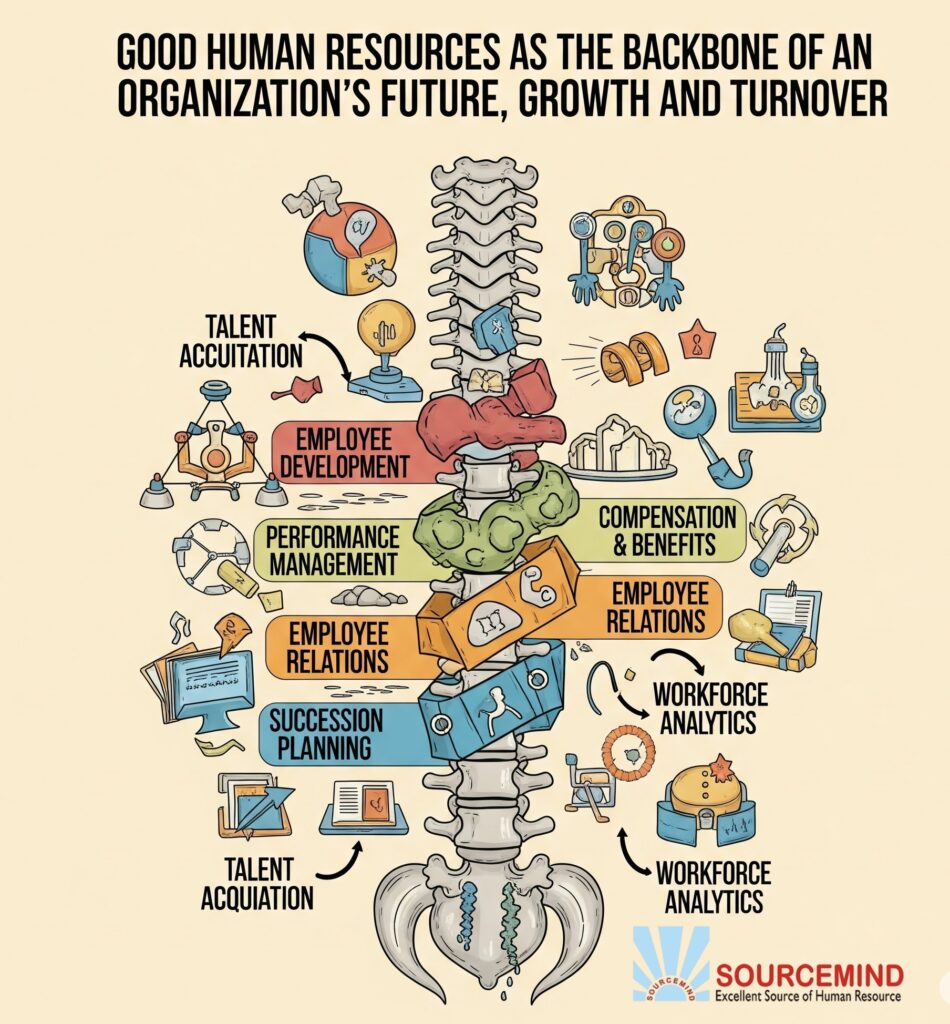
In the rapidly evolving world of business, organizations are increasingly recognizing that their most valuable asset isn’t just their technology, capital, or even their products—it’s their people. At the heart of this human capital is the Human Resources (HR) function, which plays a critical role in shaping an organization’s future, growth, and turnover.
A strong HR department doesn’t merely hire and fire—it drives strategy, builds culture, and fuels performance. Here’s how good HR makes the difference.
1. Strategic Talent Acquisition: Building the Right Foundation
Recruiting the right talent isn’t just about filling seats—it’s about identifying individuals who align with the company’s mission, values, and long-term vision. Strong HR professionals ensure that every hiring decision contributes to the broader goals of the organization.
Impact: Attracting skilled, high-potential candidates reduces turnover, increases productivity, and lays the groundwork for future leadership.
Example: Companies with a robust hiring process see 70% higher quality in new hires (LinkedIn, 2024).
2. Employee Engagement and Retention: Keeping Your Best People
Engaged employees are 87% less likely to leave their companies, according to Gallup. HR plays a central role in creating programs, recognition systems, and career pathways that motivate employees to stay and grow.
Impact: High engagement leads to lower attrition, higher morale, and greater output.
Strategy: Performance management, learning & development, feedback loops, and wellness initiatives are all part of modern HR’s playbook.
3. Organizational Culture: The Invisible Engine of Success
A company’s culture determines how people work, collaborate, and innovate. HR is the steward of that culture, shaping everything from onboarding experiences to values training and leadership behavior.
Impact: Companies with strong cultures outperform competitors by up to 20% in revenue growth (Harvard Business Review).
HR’s Role: Culture audits, DEI (Diversity, Equity, and Inclusion) initiatives, conflict resolution, and leadership development.
4. Learning and Development: Fueling Growth from Within
Top HR departments don’t just manage people—they develop them. Offering training, upskilling, and mentorship helps employees evolve alongside the business.
Impact: Companies that invest in employee development have 24% higher profit margins (ATD Research).
Example: HR teams that create continuous learning cultures see faster internal promotions and fewer hiring costs.
5. HR Analytics and Strategy: Driving Smarter Business Decisions
With modern tools, HR can now provide data on hiring trends, employee satisfaction, performance metrics, and turnover risks. These insights help senior leadership make informed, strategic decisions.
Impact: Data-driven HR leads to improved forecasting, budget optimization, and operational efficiency.
Tools Used: HRIS (Human Resource Information Systems), engagement surveys, performance dashboards.
6. Turnover Control: A Financial Imperative
High employee turnover can drain both finances and morale. A good HR department identifies root causes—whether it’s poor leadership, lack of growth, or uncompetitive compensation—and acts quickly.
Impact: Replacing an employee can cost up to 2x their annual salary. Smart HR strategies dramatically cut those costs.
Solutions: Exit interviews, stay interviews, internal mobility programs, and proactive retention plans.
7. Shaping the Future: HR as a Change Agent
Whether it’s digital transformation, market expansion, or crisis management, HR ensures the workforce is aligned, adaptable, and agile. By leading change management and future-readiness efforts, HR becomes a strategic partner in business transformation.
Conclusion: The True ROI of Good HR
Great products and smart strategies matter—but without the right people in the right roles, with the right support, none of it is sustainable. Organizations that invest in high-performing HR departments are investing directly in their future, growth, and profitability.
HR is no longer just a department—it’s a driving force behind business success.
Comments are closed.